Meet One Of Our LanguagePartners™ : An Arabic Translator With 20 Years' Experience
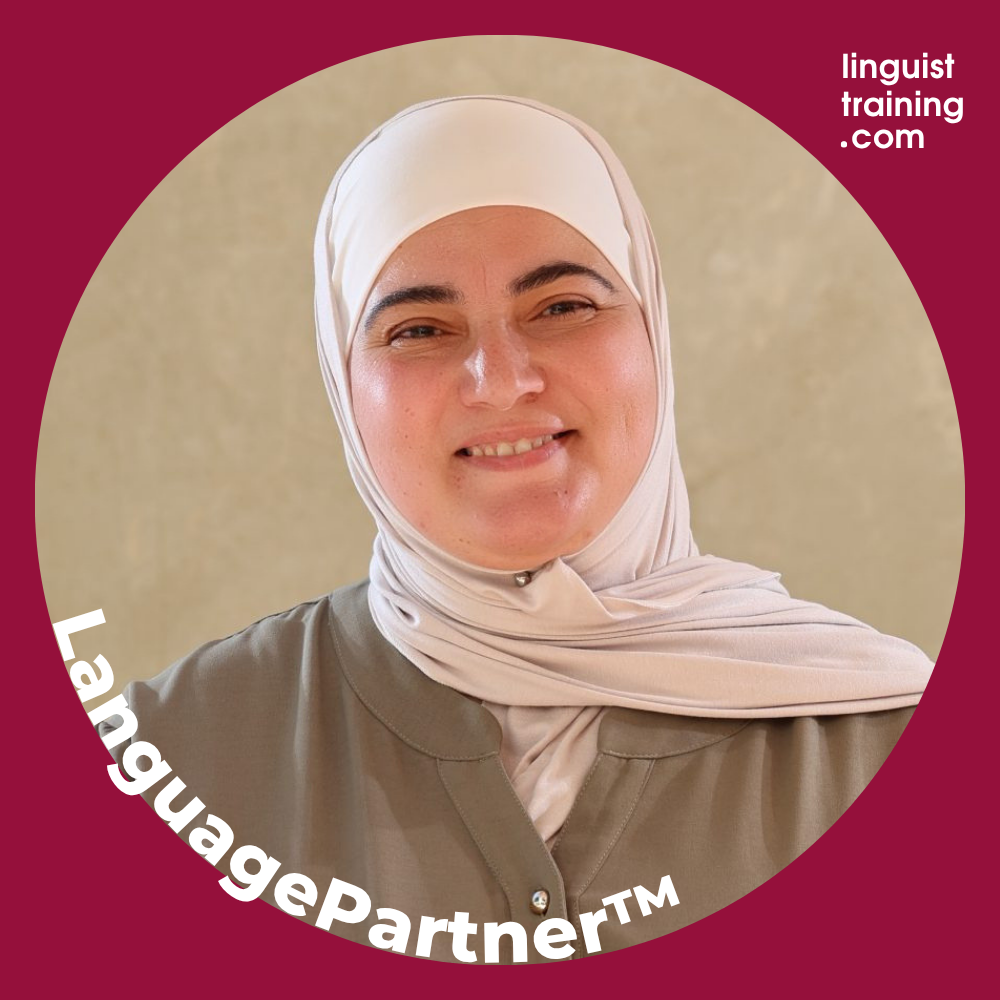
In Conversation with Soha, one of our LanguagePartners™.
With more than twenty years in the profession, Soha knows what it takes to succeed as an Arabic Translator. We talked to her about professional translation, exam preparation, and what one-to-one feedback can do for linguists working towards a translation qualification. Here is what she told us, in her own words.
How did you get into this work, and what keeps you doing it?
“I have been working as a professional Arabic Translator for more than twenty years. Throughout my career, I have worked across a variety of sectors, including Legal Translation, international development, human rights, environmental studies, public policy, and research. Because of this diversity, I have always been interested not only in producing high-quality translations, but also in understanding what makes a translation truly fit for purpose.
As a linguisttraining.com LanguagePartner™, I assess student work and provide feedback on Translation Practices and CIOL Mock Exams. What I enjoy most about this role is helping students understand the reasoning behind professional translation decisions. It is one thing to tell someone that a phrase could be improved; it is another to explain why and help them develop the analytical skills to make those decisions independently in the future. What keeps me doing it is seeing students develop over time. It is rewarding to watch someone move from relying heavily on instinct to making confident, well-reasoned professional choices.”
Walk us through what a typical mentor session looks like. What do students want help with most?
“My role as a linguisttraining.com LanguagePartner™ is slightly different from traditional tutoring (as I am not their teacher / tutor, but their Mentor). Most often, I review and assess students' Translation Practices, proofread Mock Exams, and provide detailed feedback on areas of strength and opportunities for improvement. Students are often surprised by how much they can learn from understanding the rationale behind feedback. Rather than focusing solely on what is right or wrong, I try to explain the thought process that a professional Translator might apply when approaching a particular challenge. The areas that most frequently arise are accuracy, meaning transfer, register, terminology choices, consistency, and understanding how to produce a translation that works effectively for its intended audience and purpose.”
A lot of people worry they're not 'good enough' to qualify. What would you say to them?
“I would say that almost everyone experiences some level of self-doubt when they are pursuing a professional translation qualification. One of the most encouraging things I have observed is that success is not necessarily linked to being the most naturally confident person in the room. More often, it comes from persistence, openness to feedback, and a willingness to learn from mistakes. Professional translation is a skill that develops over time. Nobody starts as an expert. The purpose of training and assessment is not to prove perfection; it is to support growth and demonstrate professional competence.”
How do you help someone who's nervous about the exam or a live assessment?
“Many students become anxious because they focus entirely on the outcome rather than the process. I try to help them focus on what they can control: preparation, understanding the assessment criteria, and developing a structured approach to the task. Detailed feedback can be particularly helpful because it turns uncertainty into clarity. Once students understand what assessors are looking for in the exam and where they already perform well, they often become much more confident. I also remind students that assessments are designed to evaluate their abilities, not to catch them out. Approaching the process as an opportunity to demonstrate their skills rather than as a test to fear, can make a significant difference.”
What does having a dedicated LanguagePartner™ give a student that they wouldn't get studying alone?
“Self-study is important, but it can be difficult to evaluate your own work objectively. A dedicated LanguagePartner™ provides an external professional perspective. Sometimes students repeatedly make the same mistake without realising it, or they overlook strengths that could be built upon further. Constructive, personalised feedback helps identify both.
One aspect I particularly appreciate about the linguisttraining.com approach is that students receive personalised feedback tailored to their individual work. That allows development to be targeted and practical rather than generic.”
In a single session, what's the kind of thing you can help a student shift or unlock?
“Often the biggest shift is not linguistic; it is analytical. Many students initially approach translation as a word-for-word exercise. A single discussion about audience, purpose, tone, context, or translation strategy can completely change the way they approach future assignments. Sometimes a student realises that there can be several correct solutions to a translation challenge, provided they are supported by sound reasoning. That understanding alone can significantly strengthen both confidence and performance.”
If someone is sitting on the fence about enrolling, what would you say to them?
“I would encourage them to think about what they hope to achieve and whether they want to get there entirely on their own or with professional guidance. One of the strengths of linguisttraining.com is that it combines structured learning with personalised support from experienced professionals who understand both language and industry expectations. Students receive feedback that is specific, practical, and directly relevant to their development. Learning independently will always have value, but constructive feedback can often accelerate progress in ways that would otherwise take much longer to achieve. If someone is serious about developing professionally as a Translator, investing in that support can be extremely worthwhile.”