Why Should You Study the DipTrans?
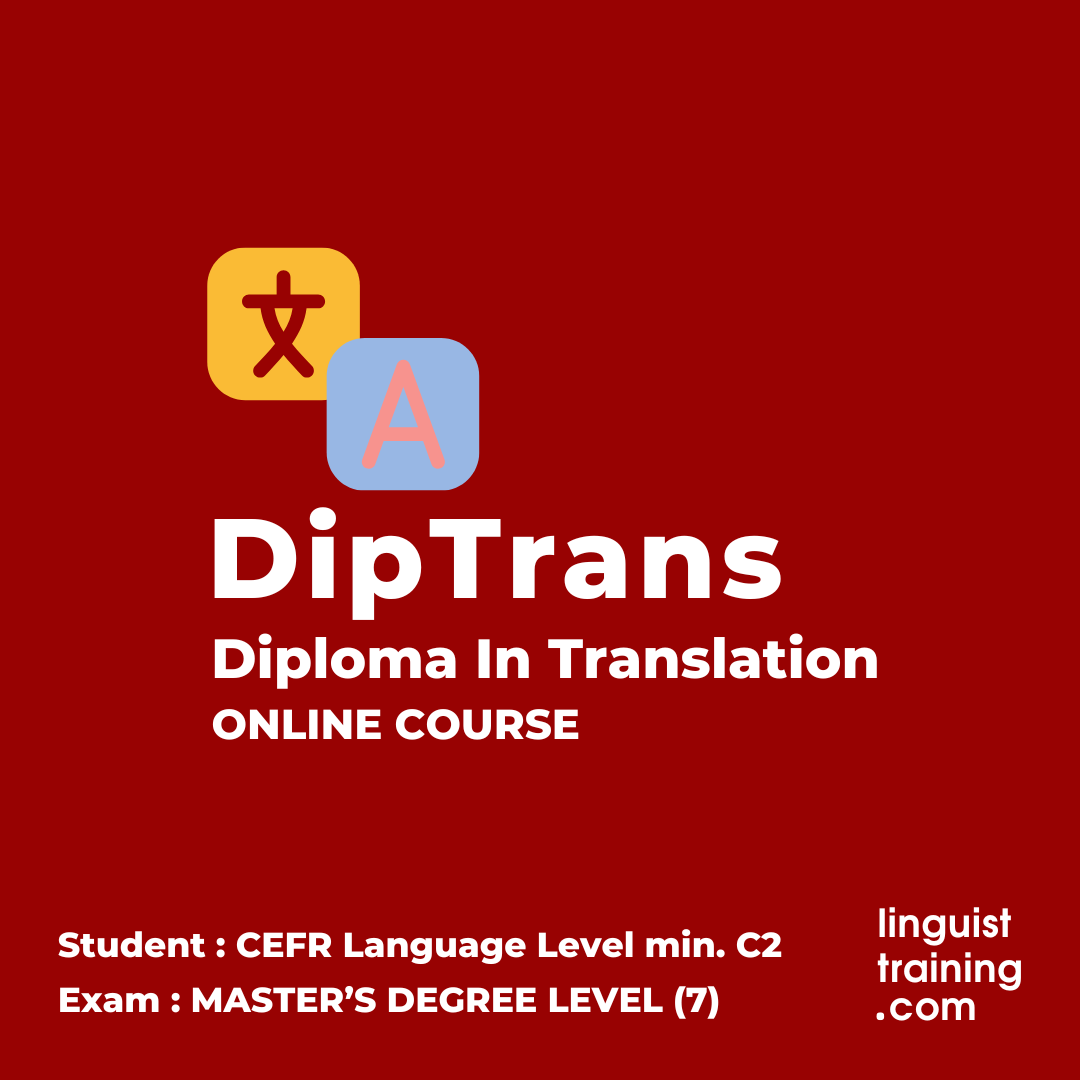
The Gold Standard for Professional Translators.
So you're already translating professionally - or at least you're serious enough about it, to want the qualification that really counts. Ask anyone in the translation industry which credential carries the most weight, and the answer is almost always the same: the DipTrans. The CIOL Diploma in Translation is widely regarded as the gold standard for professional translators - a Master's level (Level 7) qualification that proves you can translate at the highest professional standard. If you're serious about a long-term translation career, this is the one to work towards.
The DipTrans is awarded by the Chartered Institute of Linguists (CIOL) and is Ofqual-regulated. It sits at the same level as a postgraduate degree - but unlike a university MA, it's an examination of your actual translating ability rather than a taught course. You translate real texts, in real time, under timed conditions. It's rigorous, demanding, and exactly what you'd expect from a qualification at this level. Passing it means something.
Holding the DipTrans opens doors. It qualifies you for the most demanding translation assignments, both freelance and in-house. It enables you to apply for full CIOL membership and Chartered Linguist status - a professional designation that genuinely sets you apart. Agencies, clients and international organisations recognise it. The Association of Translation Companies describes it as "ideal for professional translators looking to validate their expertise with the highest level of qualification in the languages they work in."
The linguisttraining.com DipTrans preparation course is fully online and self-paced, covering translation theory and techniques, exam strategy, and marked translation practices with detailed expert feedback from a qualified LanguagePartner. You can also add additional mentoring sessions and mock exams - both of which students consistently describe as invaluable in the final weeks of preparation.
The course is comprehensive and supportive. "Your courses are absolutely brilliant and the LanguagePartner - his comments are so constructive," said one 2025 student. Another said: "I am learning a lot from their observations and comments, and I really appreciate how thoroughly they review my work." Others described the feedback as transformative - helping them see their translations through the eyes of a professional examiner and make the adjustments that make the difference between a pass and a distinction.
You'll need to be working at CEFR C2 level to sit the DipTrans - and ideally you'll have already completed the CertTrans or have equivalent professional experience. This isn't a course for those just starting out. But if you're ready for it, and you're committed to the preparation it requires, the DipTrans is worth every bit of the effort.
It's not easy. Nothing worth having usually is! But ask any linguist who has passed it what it meant for their career - and you'll get your answer.
Level: 7 (Master's equivalent, C2 CEFR) | Access: 12 months
Explore the DipTrans course at linguisttraining.com/courses/diptrans