Understanding the CEFR
The Language Standard That Shapes Translators and Interpreters.
If you are a bilingual professional considering a career in translation or interpreting, or if you are already working as a linguist and thinking about gaining a recognised qualification, you will almost certainly have come across the term CEFR. But what exactly is it, why does it matter, and how can understanding it help you choose the right course and advance your career?
What Is the CEFR?
The Common European Framework of Reference for Languages, universally known as the CEFR, is the internationally recognised standard for describing language ability. Developed by the Council of Europe, it provides a clear, consistent framework for measuring language proficiency across reading, writing, speaking and listening. It is used by language schools, universities, employers, professional bodies and awarding organisations across Europe and beyond.
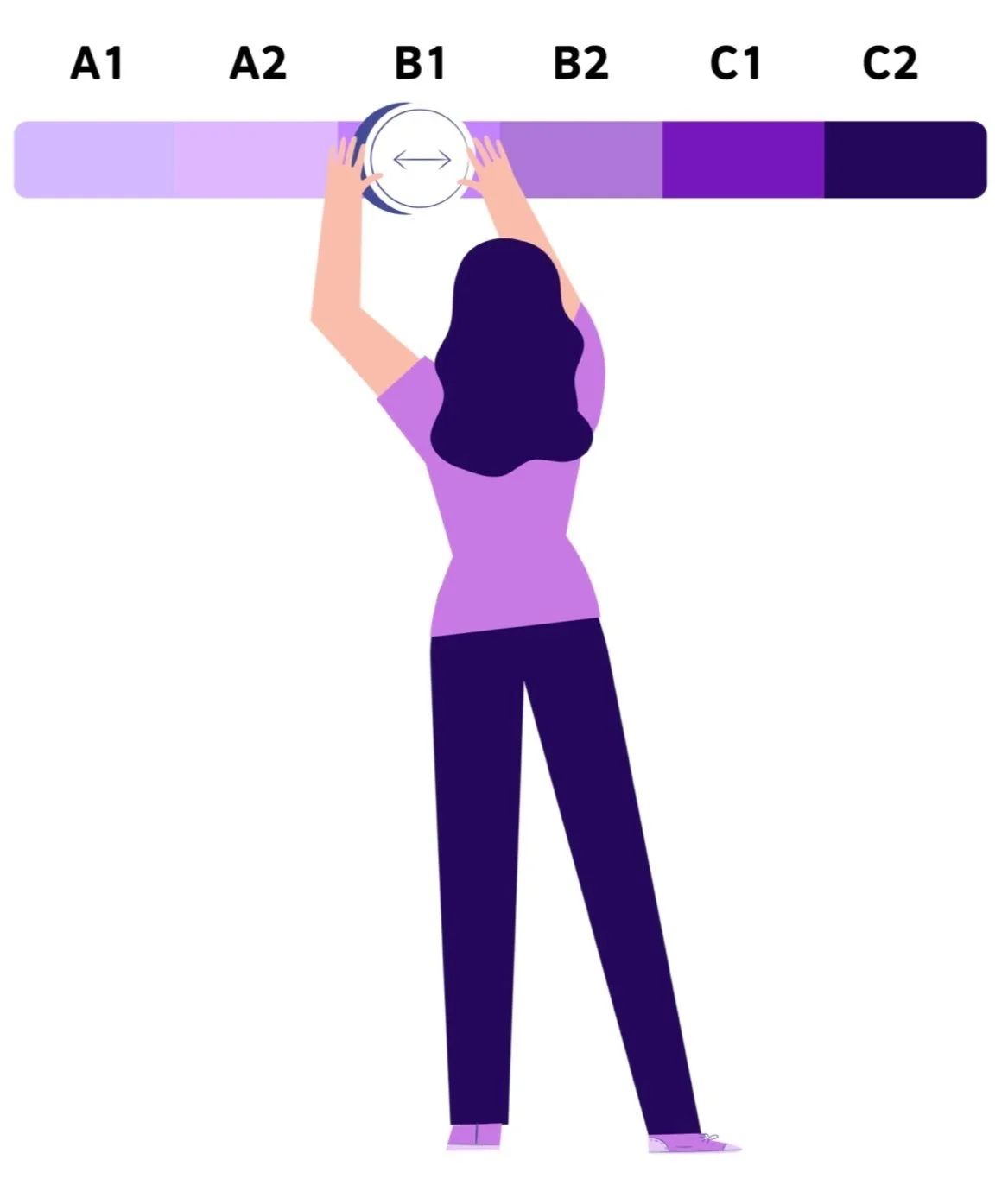
The CEFR divides language ability into six levels: A1 and A2 (Basic User), B1 and B2 (Independent User), and C1 and C2 (Proficient User). Each level has a precise description of what a learner can do in the language at that stage. A B1 speaker, for example, can handle most everyday situations, whilst a C2 speaker has a near-native command of the language, including nuance, register and idiomatic expression.
You can find the official level descriptions on the Council of Europe website.
Why Does the CEFR Matter for Translators and Interpreters?
For anyone working in or training for professional translation or interpreting, the CEFR is not just a background detail - it’s a practical tool with real consequences for your career.
Professional translation and interpreting qualifications are mapped directly to CEFR levels. The CIOL Certificate in Translation (CertTrans) for example, is a Level 6 qualification pitched at C1, meaning candidates are expected to demonstrate a high degree of language proficiency and sophistication in both their working languages. The CIOL Diploma in Translation (DipTrans) sits at Level 7 and requires C2-level command. Meanwhile, the DPSI in Law or Health, one of the most widely recognised qualifications for public service Interpreters in the UK, also operates at Level 6.
Understanding your own CEFR level before you enrol on a translation or interpreting course is therefore essential. Choosing a qualification that does not match your current level is one of the most common and most avoidable reasons why candidates struggle or fail their exams.
How the CEFR Helps Students Choose the Right Path
At linguisttraining.com, students are encouraged to establish their CEFR level before selecting a course. The process is straightforward: if English is not your first language, you test your English; if English is your first language, you test your second or other working language. Free, reliable CEFR level tests are available online, including through the British Council.
Once you know your level, the pathway becomes much clearer. A bilingual professional at B2 would typically begin with a foundation-level course to build the underpinning knowledge and skills needed for professional-level work. Someone already operating confidently at C1 may be well placed to move directly to CertTrans preparation. A highly experienced linguist at C2 might be ready to work towards the DipTrans, the gold standard for professional translators.
The CEFR also helps students understand what is genuinely expected of them at each stage - not just linguistically, but in terms of the precision, register and analytical thinking that professional translation and interpreting demand.
A Universal Benchmark for a Global Profession
One of the CEFR's greatest strengths is its universality. Whether you are a Portuguese-English translator based in Lisbon, an Arabic-English Interpreter working in the UK court system, or a Spanish-English linguist looking to gain a UK-recognised qualification, the CEFR gives you and your clients, employers or awarding body a shared language for describing your skills.
For professional linguists, that clarity is not just useful -- it is professionally indispensable.
Ready to find your CEFR level and choose your course? Visit linguisttraining.com/whichcourse to get started.